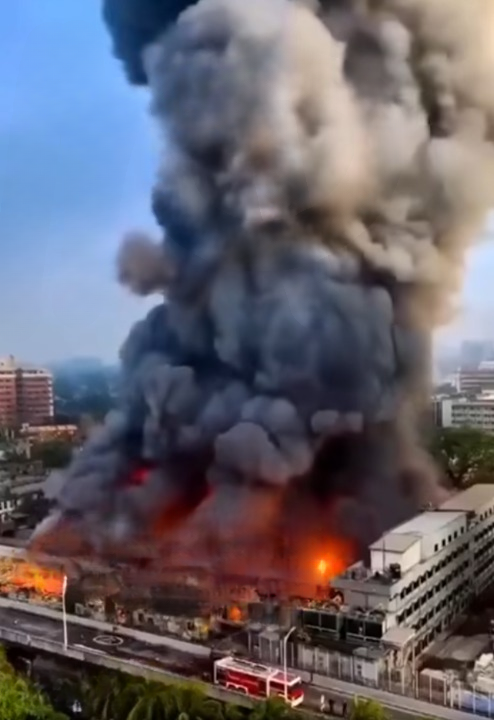
In the early hours of Monday morning, people living near the China-Myanmar border were woken to a shockwave as a powerful earthquake shook several Southeast Asian countries. The earthquake, measuring 7.7 magnitude, was described by seismologists as one of the strongest in the region in decades.
The suddenness of the earthquake shook homes, offices, and schools within hundreds of kilometers. People fled into the streets in panic as emergency sirens blared across cities. Within minutes, local and national agencies were rapidly organizing relief efforts.
According to the U.S. Geological Survey (USGS), the earthquake originated at a depth of approximately 10 kilometers below the Earth’s surface—a relatively shallow depth, but one that amplifies its destructive power. The tremors spread widely, reaching southern China, northern Thailand, and parts of Myanmar.
People from major cities to remote villages reported the ground shaking violently beneath their feet. In some areas, the shaking was described as a gradual wave, while in others it felt like a sudden, violent tremor. The differences in perception highlight how seismic waves travel differently in soil, rock, and mountainous terrain.
Communities closest to the earthquake’s epicenter experienced the most severe tremors. Homes not built to withstand such force suffered extensive structural damage. In more distant cities, the shaking was still strong enough to trigger panic and evacuations.
The earthquake struck without warning in the pre-dawn hours, catching many off guard. Some residents, still in their pajamas, ran barefoot into the streets. Families clung tightly together, anxiously watching buildings shake and crack.
Eyewitnesses in northern Thailand described streetlights flickering and windows shattering. In Yunnan province, China, apartment buildings shook for nearly a minute, frightening people to retreat into their homes. In Myanmar, villages near the border reported collapsing walls, damaged roads, and widespread power outages.
Critical infrastructure was also impacted. Power outages occurred in several cities, water pipes burst, and mobile phone networks were disrupted, making it difficult for people to contact loved ones. The communication failures added to the confusion, especially for families separated across the region.
Initial reports from local governments confirmed dozens of fatalities in affected areas and hundreds injured. Tragically, some remain trapped under collapsed buildings, and rescue teams continue to work tirelessly to help them.
Hospitals in the hardest-hit areas were overwhelmed. Emergency rooms were filled with patients suffering from broken bones, head injuries, and wounds from falling debris and shattered glass. Doctors and nurses worked around the clock, while volunteers lined up to donate blood and assist the injured.
Officials warned that the death toll was likely to rise as search and rescue missions reached more remote communities. Many mountain villages were difficult to access due to landslides and damaged roads, delaying emergency assistance.
Within hours of the earthquake, local authorities mobilized rescue workers, soldiers, and volunteers. Specialized search and rescue teams equipped with heavy machinery, sniffer dogs, and thermal cameras began searching the rubble.
Their mission was extremely urgent. The survival rate of those trapped under the rubble would plummet after the first 48 hours. “Every second counts,” said Dr. Li Wei, disaster relief coordinator for Yunnan province. “We are focused on helping as many people as possible before it’s too late.”
Rescue efforts faced significant challenges. Roads were cracked or blocked, bridges were unstable, and aftershocks made the work dangerous. However, stories of resilience were emerging. In one case, a child was pulled alive from under the rubble of a collapsed school, giving hope to a worried family awaiting news of their missing relative.